
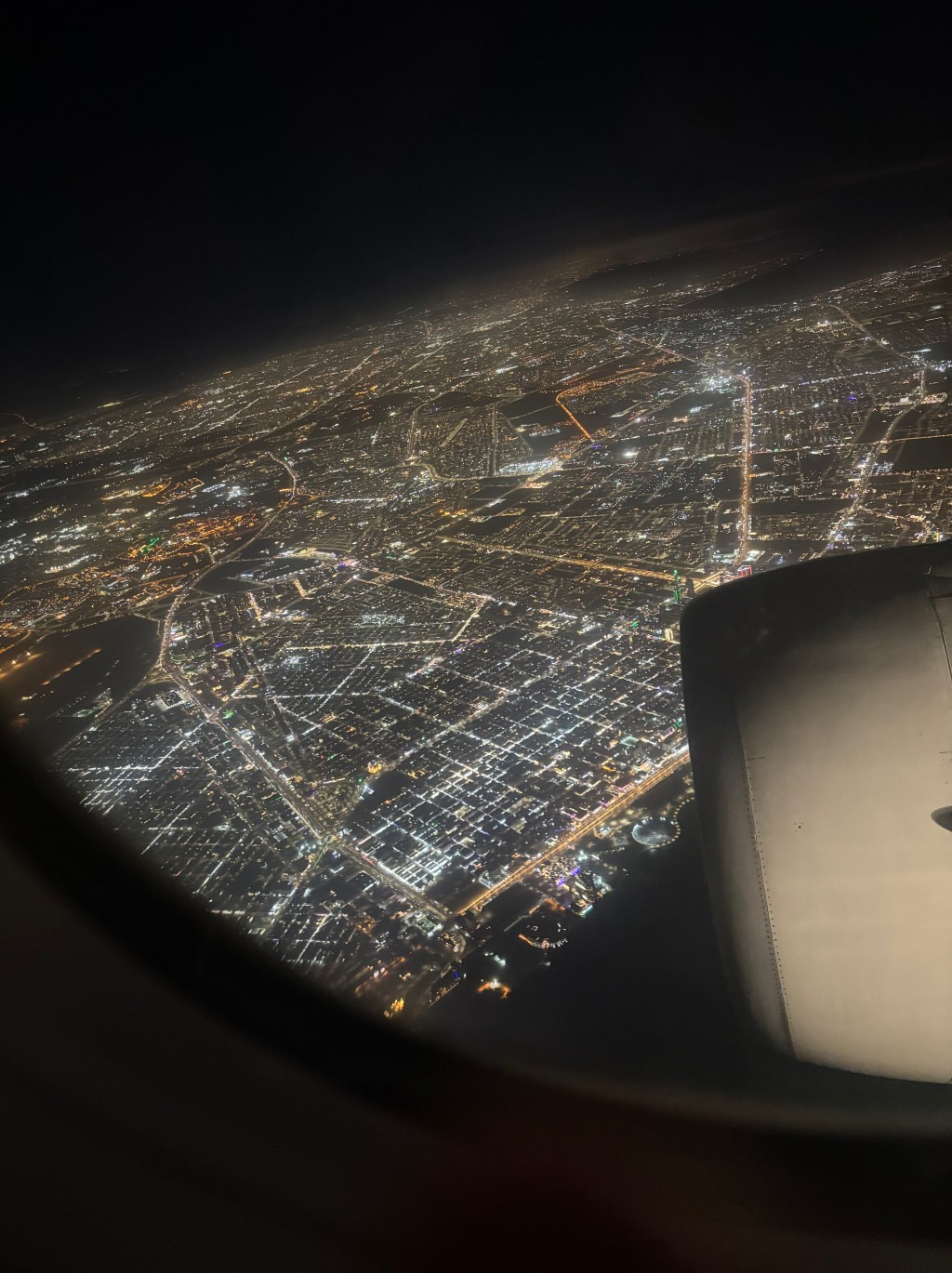
This past week I flew back to my home in Saudi Arabia for Thanksgiving break. The long and boring overnight and early morning flights made me realize something: travel is one of the most important tools of public diplomacy. I used to believe strong international relations can only be shaped by treaties, leaders, or military alliances; however real human contact plays a bigger role in shaping global politics. This can be shown from what I just learned about the ‘contact hypothesis’ introduced by Gordon Allport where personal interaction reduces prejudice and promotes positive interaction between groups more effectively than official messaging, for example.
This proves to be important through programs such as the Fulbright exchange and cultural visas experience to strengthen mutual understanding and relationships between the United States and other countries. However, it is also through everyday travel and busy airports that does the same work is done on a much larger scale, especially during the holidays (which I definitely noticed in the Dulles Airport in D.C. on the way back).
This is where policy matters. Travelers act as informal diplomats, and visa rules, restrictions, and border regulations determine whether these cross-cultural encounters happen at all. Travel policies don’t just drive tourism revenue, but also allow for cultural understanding, and restrictive policies would create large distances between societies.
Sometimes the most powerful foreign-policy tool is simply letting people meet.




Leave a comment