
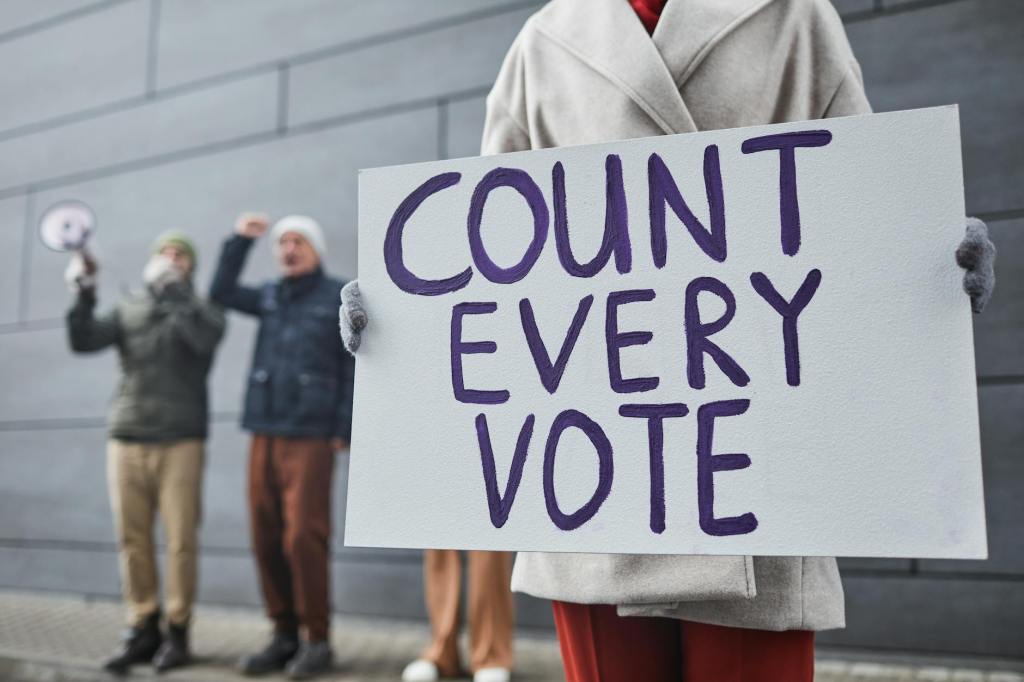
Happy late New Year’s, The People’s Blueprint! This past week, I hosted a voter registration event with the help of 3 of my classmates in the Student Democratic Union. The registration wasn’t elaborate, simply a form you would fill out on your own time with your necessary information, such as address, social security number, and some form of identification card. What surprised me wasn’t how easy it was to facilitate, but how many students came up to the table and were hesitant or didn’t know how to register.
Some of my peers told me directly they didn’t see the point. Voting to them felt far away, something for when they were older and later in life. A few told me they didn’t want to get involved in politics and didn’t think their vote would matter anyway. It’s not that they are disengaged from action in the United States; they still expressed that they cared about things like gas prices and political representation. They just didn’t connect those things to voting and struggled to believe their participation would have an impact in a solidly partisan state.
Many people also believed that they weren’t eligible to register yet. Several people assumed they needed a driver’s license, and some even thought it happened automatically when you turned 18.
The form was simple. The confusion surrounding it was not. States rely on individuals to seek out information regarding voter eligibility on their own, causing young people to slip through the cracks. Sitting at the table, I realized that voter participation wasn’t just about motivation but clarity and access. When people don’t understand why or how to register, they begin to opt out quietly. If we want young people to vote, we can’t assume that they already know how to start.





Leave a comment