
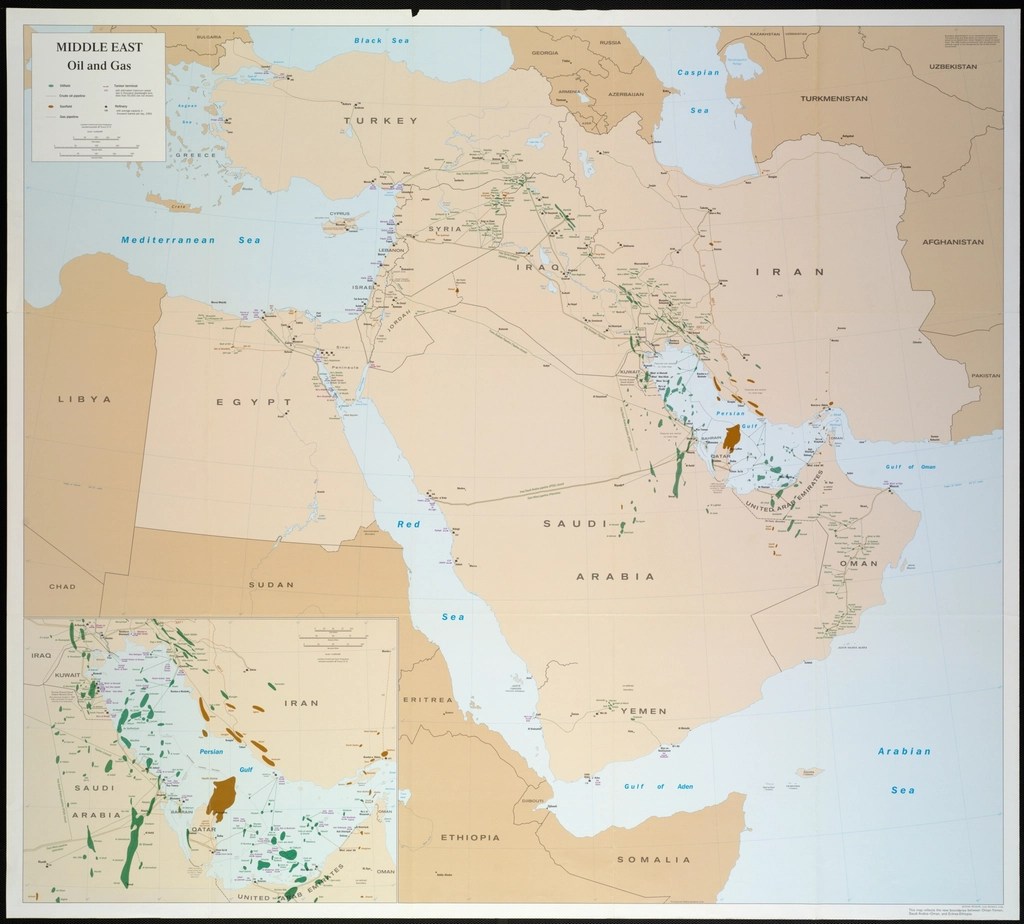
As someone who grew up and spent a large portion of their life living in Saudi Arabia before moving to the United States, the complex relationship between the two countries is not foreign to me. I also spent my entire Sophomore year of high school writing a research paper on oil nationalization in the Middle East, so understanding the importance of alliances between nations in response to trade with other nations has always been important. That background is part of why the current shifts in that region feel worth paying close attention to.
The biggest trigger was the joint U.S.-Israel attacks on Iran that killed Iran’s Supreme Leader and much of its military leadership. A ceasefire followed, but things have been rocky ever since, with fighting flaring up again over the critical Strait of Hormuz and even more conflict spilling into Lebanon. Through this chaos, new alliances are forming. Israel and the UAE have grown closer, building on what I now understand people have been calling the Abraham Alliance 2.0. Surprisingly, even Syria signed the deal with Israel. At that same time, Saudi Arabia, Turkey, Pakistan, and Egypt are quietly coordinating more closely. And in the Mediterranean, countries such as Israel, Greece, and Cyprus have teamed up militarily to weight up against Turkey.
On top of all of these growing alliances, Middle Eastern countries are also racing to become AI and tech hubs, pulling the U.S. and China into a new kind of competition for influence. Well, why does this matter? Well, to me it’s incredibly fascinating since I plan to update my sophomore year research paper on shifting control over energy in the Middle East, but also, I believe that anyone who cares about oil, trade, foreign relations, or global stability needs to understand that these shifting relationships are just as important as the wars themselves. Alliances are more fluid and transactional now more than ever, and small flashpoints can escalate fast and drag in outside powers.







Leave a comment